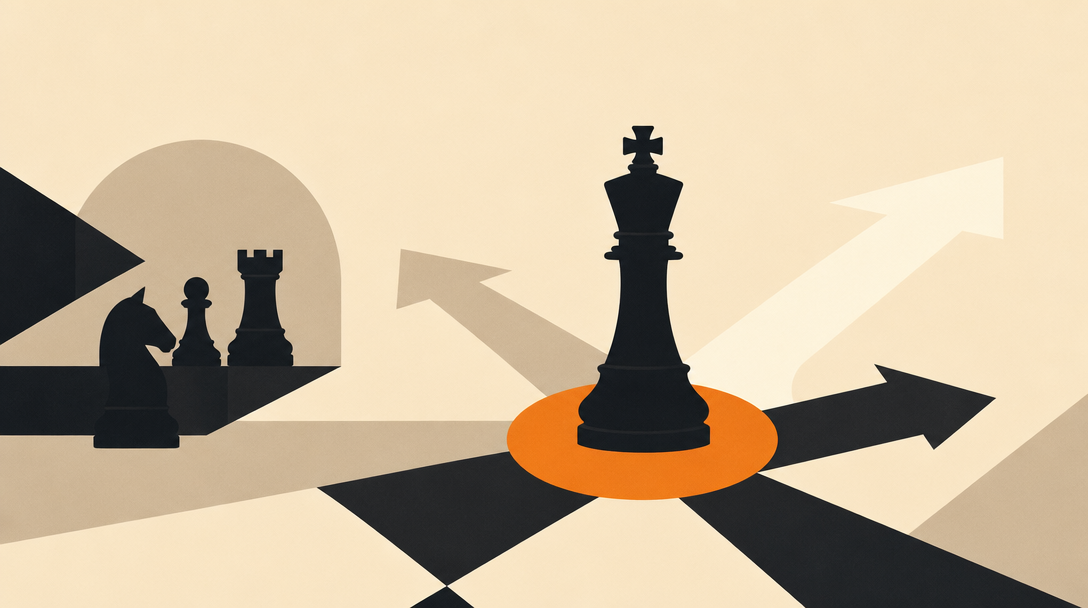
When marketing isn't working, the reflex is almost always the same. Run more ads. Post more often. Try a new platform. Rewrite the homepage. The activity goes up, the results stay flat, and everyone gets busier. The diagnosis is usually wrong. Most businesses don't have a tactics problem. They have a strategy problem dressed up as one.
The symptoms of a strategy gap
A missing strategy shows up in patterns, not single moments. The website gets redesigned every two years but the messaging never lands any better. Ad campaigns launch, spike, and fade, and nobody can explain why the good ones worked. Content gets published in bursts followed by silence, because there's no reason behind the cadence. Every channel is running, none of them are pulling in the same direction.
The giveaway is the meeting where someone asks what the marketing is actually trying to achieve, and the room goes quiet. If the honest answer is 'more leads' or 'more awareness', you've got a goal, not a strategy. A strategy explains how you're going to get there and why that approach works for your business specifically, not how anyone would get there.
Tactics are cheap, decisions are expensive
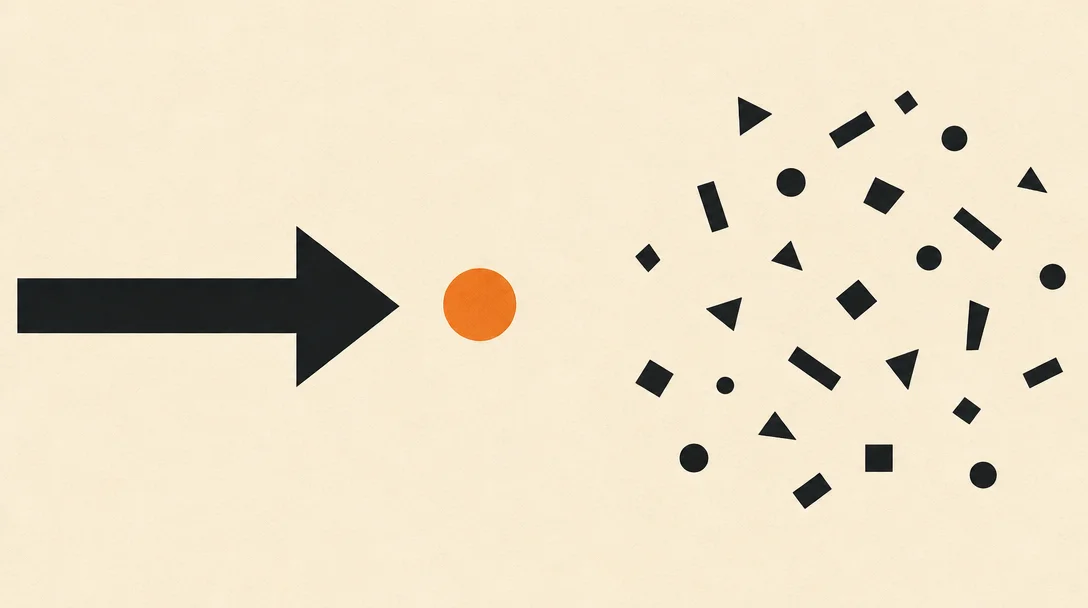
Tactics are abundant and getting cheaper by the week. Anyone can spin up a Google Ads campaign in an afternoon. AI will draft you thirty social posts before lunch. A freelancer will rebuild your landing page for a few hundred dollars. The barrier to doing marketing has never been lower, which is exactly why doing more of it rarely fixes anything.
What's expensive isn't the tactic, it's the decision behind it. Who is this for? What are we saying to them? Why should they believe us? What happens after they click? Those questions are hard because they force you to choose. Choosing means saying no to things, and saying no is uncomfortable when you're not sure it will work. So businesses default to saying yes to everything and hoping something sticks. Something usually does, eventually, by accident. It's an expensive way to learn what you could have worked out on paper first.
What a real strategy looks like
A strategy isn't a document. It's a set of decisions that make the next hundred decisions easier. It answers a few questions clearly enough that the tactics almost choose themselves:
- Who you're for, specifically. Not 'small businesses' or 'everyone in Sydney'. The kind of customer you actually want more of.
- What you stand for that the next three competitors don't. A point of view, not a feature list. We wrote about this separately because it's the part most businesses skip.
- Where you'll show up and why. Two or three channels done properly beat seven channels done on autopilot.
- How you'll know it's working. A metric tied to revenue or pipeline, not vanity numbers that look good in a report.
When those decisions are made, the tactics fall into place. Your ads have something to say because you know who you're talking to. Your content has a reason to exist because it's building toward something. Your social posts stop being a feed obligation and start being proof of the brand you've already defined. The work gets cheaper because you're not reinventing the brief every week.
Where to start if you're stuck
If your marketing feels like a treadmill, the fix isn't to run faster. Stop and ask the boring questions first. What does this business actually do better than the alternatives? Who benefits from that most? If you can't answer those in two sentences each, no amount of ad spend or content volume will save you. A fast site and clever targeting can't compensate for a message nobody remembers.
The businesses with clear strategy aren't always the ones spending the most. They're the ones where every channel is doing a job that was assigned to it on purpose. Their ads, their social, their SEO and their content all sound like they came from the same place, because they did. That coherence is the strategy showing up in public.
If you've been throwing tactics at a strategy problem, let's pull it apart properly. We help businesses figure out who they're for, what they stand for, and where their marketing should actually go. The tactics come after, and they work a lot better when they're not carrying the whole weight.