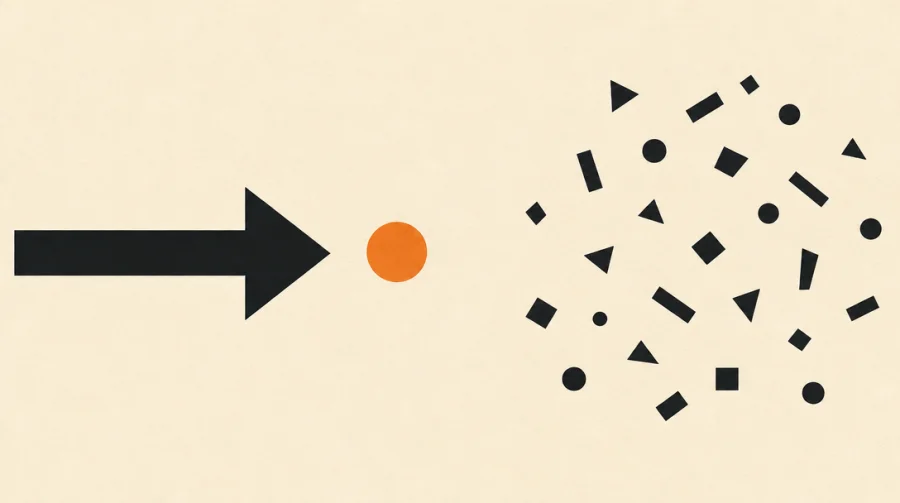
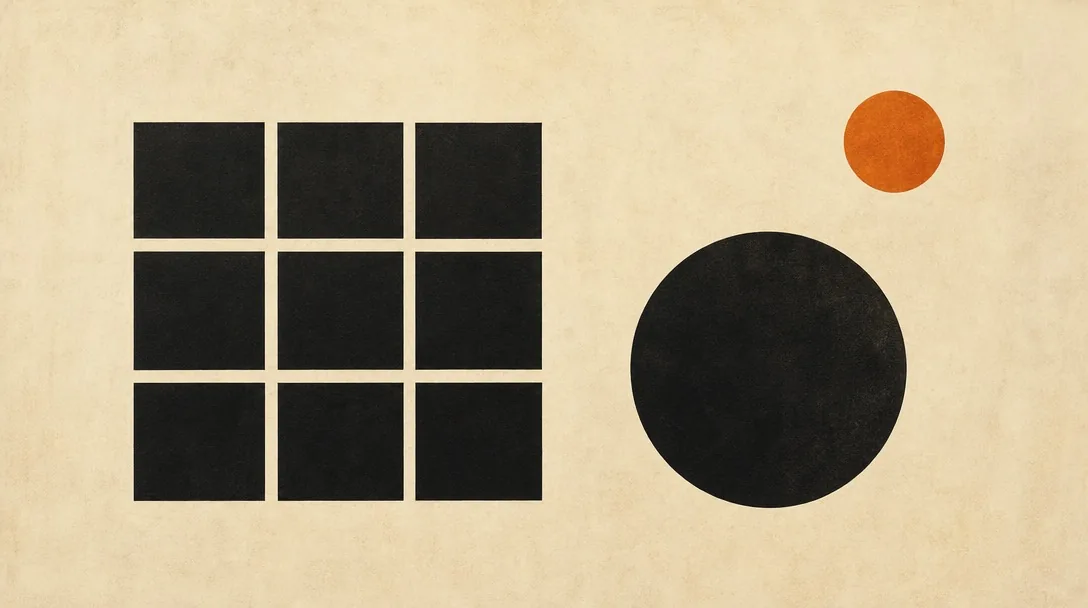
Look at ten business websites in the same industry and you’ll struggle to tell them apart. Same promises, same stock photos of smiling people pointing at laptops. ‘Innovative solutions.’ ‘Award-winning service.’ None of it means anything, and your customers know it.
The template trap
Most marketing isn’t written, it’s assembled. A business owner looks at what competitors are doing and copies the shape of it. The website gets the same pages and the ads get the same claims. Nobody stops to ask whether any of it actually sounds like them. The result is a category where everyone is shouting the same words and expecting to stand out.
The irony is that the businesses themselves aren’t actually the same. They serve different customers and have different strengths. The sameness isn’t real. It’s just what happens when you write marketing by looking sideways instead of looking inward.
The cost of blending in
Generic marketing doesn’t just feel boring. It’s expensive. When your message is interchangeable, the only lever you have left is price, and that’s a losing race. Your ads cost more because the creative doesn’t earn attention. Your SEO ranks for the same generic terms everyone else fights over. Every channel works harder and returns less, because the foundation is mush.
The businesses that grow efficiently aren’t usually the ones with the biggest budgets. They’re the ones whose message does some of the selling before a conversation even starts. A clear angle means the right people already know why they’re calling you.
What actually makes you different
Differentiation isn’t about features. Your competitors can copy a feature by Tuesday. It’s not price either, unless you genuinely want to race to the bottom. The thing that actually separates businesses is point of view. What you believe about your industry and what you refuse to do. That’s the stuff nobody can clone.
A strong point of view repels some people and attracts others. That’s the point. Marketing that tries to appeal to everyone appeals to no one. When you say something specific, the right customers lean in and the wrong ones self-select out. Both outcomes save you time and money.
How to find your angle
Most businesses already have a point of view. They just haven’t written it down. Here’s how to dig it out:
- Write down what you’d say about your industry if you couldn’t mention your product at all. That’s usually where the real angle lives.
- Ask your best customers why they chose you and stayed. The pattern in their answers is your positioning, even if you’ve never articulated it.
- Look at what your competitors all say, then say the opposite or say nothing about it. If everyone claims ‘fast turnaround,’ find a different fight.
- Pick a tone and stick to it. A consistent voice does more for recognition than any logo or colour palette. We’ve seen this with social content and it applies everywhere.
The honesty test
Here’s a simple check. Cover up your logo and read your homepage out loud. Could it belong to any of your competitors? If yes, you’ve written a template, not a brand. The fix isn’t more words. It’s fewer, better ones. Cut every claim a competitor could make, every sentence that doesn’t add something specific, and see what’s left. Often it’s not much. That’s the starting point, not a problem.
The same test works on your ads, your emails, your social posts. If they could be anyone’s, they’re no one’s. Good content comes from a clear voice, and a clear voice comes from knowing what you actually think.
Finding your angle isn’t a one-off exercise. It’s the foundation everything else sits on, from your SEO strategy to your paid creative. If your marketing feels generic and you’re not sure where to start, let’s talk. That’s the kind of work we do before touching a single ad or page.