Most of your marketing runs on rented land. Social platforms and ad auctions. You don't own that reach, you borrow it, and the landlord changes the terms whenever they like. Search is the exception. The rankings you earn keep working long after the effort stops, which makes SEO the only channel you actually own.
Every platform you use to reach customers runs on the same business model. They sell attention. The free reach they hand out is a sample, and the samples get smaller every year. Organic social media isn't free anymore, and paid reach is priced to match. You can't argue with that model and you shouldn't try. You can only build something on your own side of the fence, where the landlord can't touch it.
What owned actually means
An owned channel is one where the asset compounds instead of expiring. Your website is the obvious one. Every page you publish adds to the same foundation, and every link you earn or piece of structure you add makes it stronger. Email lists work the same way. A customer who hands over their address is reach you can use without asking a platform for permission.
But the biggest owned asset for most businesses is their presence in search results. Search is the one place customers come looking for you instead of you chasing them. Someone typing 'accountant near me' or 'best CRM for tradies' isn't scrolling past you. They're asking a question, and the site that answers it best gets the click. A conversion-focused website turns that click into a lead, and the whole chain is yours.
Why search keeps rewarding owners
Search engines have one job: send people to the best answer. They don't care how big your ad budget is or how many followers you have. They care whether your page deserves the spot, which means the businesses that win are the ones that built the best answer, not the ones that paid for the most attention.
AI search has made this more interesting, not less. When AI answers questions before anyone clicks, the sources it cites are the ones with real expertise on the page. Being the obvious answer is worth more now, because you get named even when you don't get the click.
The compounding part
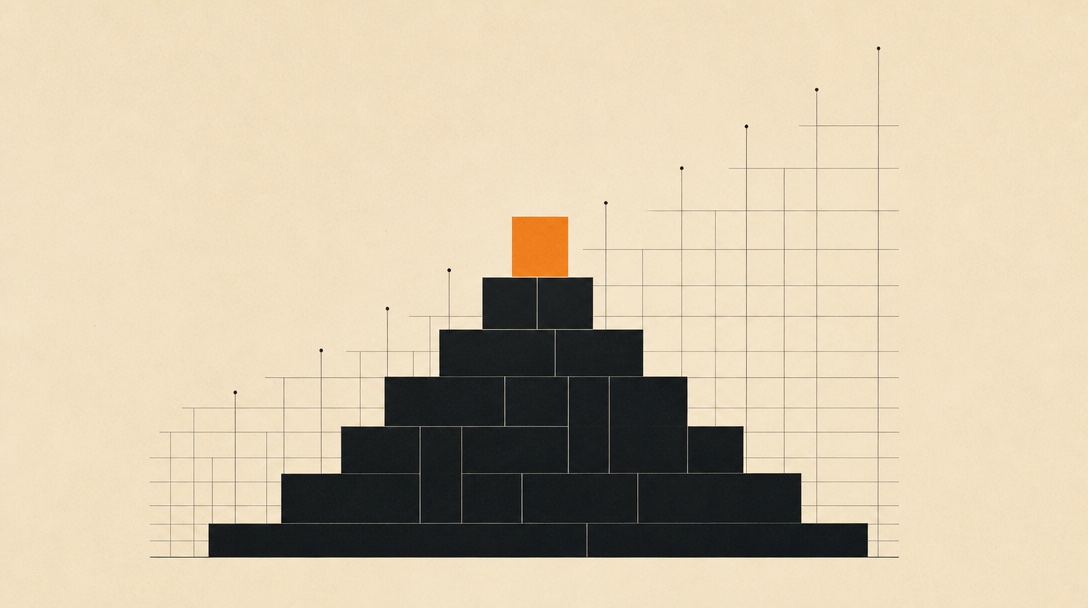
Rented reach is a transaction. You pay, you get reach, and it stops when you stop paying. Owned reach is an investment. A page that ranks for a commercial term keeps bringing in enquiries years after you wrote it, and each new piece of work makes the next one easier. Internal links pass authority around your site. Revised pages rank better than abandoned ones. New content gives search engines more reasons to understand what you do. It's the same compounding pattern as a content engine that feeds your SEO and your ads, just stretched over a longer timeline.
That's also why SEO feels slow at first. Compounding always does. The first few months look like nothing, then the curve bends, and eventually the asset is worth more than everything you spent building it.
The honest timeline
SEO is not a quick fix, and anyone who sells it as one is lying to you. Technical problems can be fixed in weeks. Competitive terms can take a year or more. New pages land somewhere in between. But the alternative never compounds at all. Ad spend stops when the budget stops. A social account resets the moment the algorithm changes. A fast, well-structured site just keeps getting harder to displace the longer you hold it.
If your marketing is all rented and nothing owned, that's a risk worth fixing while time is on your side. It's cheaper to build the asset before you need it than to buy it back after a platform changes the rules on you. Our SEO service is built to do exactly that, and we're happy to talk about what it would take.